



Beyond London, Geneva, & Monaco: The European Luxury Property Markets Capturing Investor Attention
London, Geneva and Monaco remain the cornerstones of European luxury real estate. These are markets defined by scarcity, legal stability, and decades of proven capital appreciation – and they continue to attract the world’s most discerning investors for good reason. But across the continent, a new conversation is quietly gaining momentum. Sophisticated investors and their advisors are broadening their gaze, identifying a select group of European destinations that combine lifestyle value, genuine supply constraints, and strong long-term appreciation potential. These are not speculative plays. They are the next chapter in a familiar story – one Unica Capital knows well.
The fundamentals that made London and Geneva so enduring – restricted supply, natural beauty, international demand, and institutional scarcity – are not unique to those cities. They exist, in varying degrees, across a number of European markets that have historically sat just beyond the mainstream investment conversation. That is beginning to change.
The Case for Geographic Diversification
For ultra-high-net-worth investors, portfolio diversification has always extended beyond asset class. Geographic diversification – holding ultra prime property across multiple jurisdictions — is now a structural priority rather than an aspiration. According to Altrata’s World Ultra Wealth Report 2025, the global UHNW population has reached 510,810 individuals collectively controlling nearly $60 trillion in wealth, and these investors are increasingly maintaining residential footprints across multiple countries. Real estate, for this cohort, functions simultaneously as a lifestyle asset, a wealth preservation vehicle, and a hedge against single-market exposure.
The question for those advising UHNW families is no longer whether to diversify geographically, but where. The answer increasingly points beyond the established prime markets to a handful of European destinations characterised by limited land supply, growing international demand, and the kind of natural and architectural scarcity that underpins long-term value.
Lake Como: A Market Defined by Its Constraints
Few markets illustrate the power of scarcity as clearly as Lake Como. The combination of its dramatic alpine lakefront setting, strict planning restrictions, and enduring international appeal has created a real estate environment where supply is genuinely constrained and demand continues to outpace it.
The numbers reflect this. According to research compiled by Investropa, property prices in Como municipality rose by 9.27% year-on-year as of mid-2025 — significantly outpacing Italy’s national residential average. In the most coveted locations, prime lakefront properties exceed €12,000 per square metre, and luxury villas in areas such as Bellagio and Laglio regularly trade between €5 million and €40 million. Importantly, international buyers represent over 80% of the luxury segment, with strong demand from American, British, German, and Swiss buyers. Multiple-offer situations for lakefront properties remain common, and sellers in prime locations have little incentive to negotiate on price.
For investors, the compelling aspect of Lake Como is not the headline numbers alone — it is the structural conditions that underpin them. Planning restrictions are rigorous. New development in the most prestigious areas is tightly controlled. Waterfront land is finite. These are not temporary conditions; they are built into the geography and regulatory landscape of the region. Engel & Market Report 2025 confirms continued price stability and slight growth in the luxury segment, underpinned by ongoing international demand and scarce supply of quality homes. For Unica Capital, these are precisely the market characteristics that inform long-term investment conviction.
Sardinia’s Costa Smeralda: Ultra-Luxury in a Protected Landscape
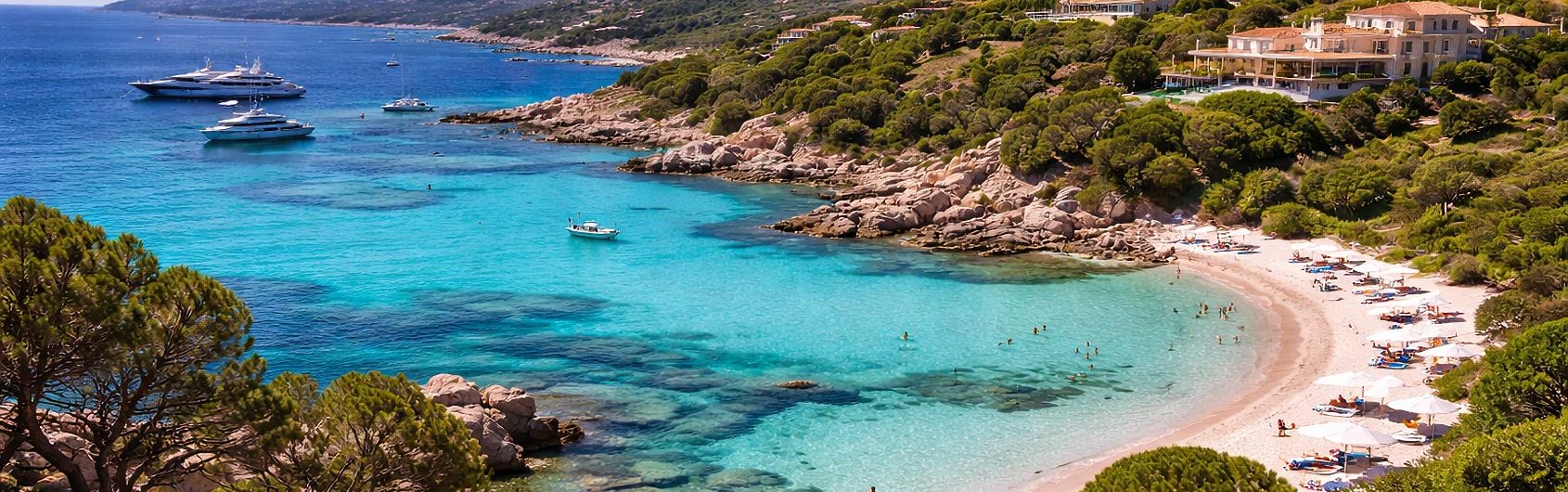
The Costa Smeralda occupies a category of its own within the European luxury market. Created as a purpose-built resort zone in the 1960s, its architectural regulations, strict building density controls, and protected coastline have maintained a level of exclusivity that few comparable destinations can match. This is a market where supply is not merely limited — it is deliberately preserved.
Prime residential prices in Costa Smeralda increased by 18% in 2023, representing the second-highest growth rate in Italy. Porto Cervo maintains average property values of €19,375 per square metre, with the most exceptional waterfront properties reaching €27,000 per square metre. The average property value across the Costa Smeralda stands at approximately €15.2 million. International buyers account for around 80% of all transactions, with demand particularly strong from European, Middle Eastern, and American buyers — many purchasing with cash.
What distinguishes Costa Smeralda from other luxury coastal markets is its absolute commitment to the preservation of landscape and character. LVMH’s reported moves in 2025 to integrate iconic local hotel properties into its portfolio signal the continued appetite of global capital for this market — and the broader shift towards branded, experience-led luxury real estate that commands premium values. For investors seeking an asset that is simultaneously scarce, internationally recognised, and deeply aligned with the direction of high-end travel and lifestyle spending, Sardinia represents one of the most compelling cases on the European map.
St. Tropez: The Endurance of the Iconic
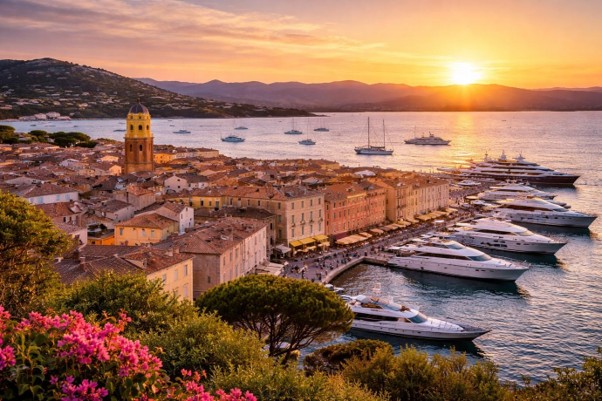
St. Tropez has long been understood as a lifestyle destination. What is increasingly recognised is its character as one of Europe’s most resilient and liquid ultra-prime real estate markets. According to data from Barnes International and Côte d’Azur Sotheby’s International Realty, median home prices in St. Tropez reached approximately €20,900 per square metre in mid-2024 — a level surpassed only by Monaco within the European context. Prime villa prices average around €18,000 per square metre, with the most exceptional estates trading in the €15 to €30 million range. One transaction in 2024 — businessman Ken Griffin’s acquisition of the former Gunter Sachs estate — reportedly reached €85.5 million, reflecting the depth of appetite at the very top of this market.
International buyers account for approximately 70% of prime purchasers in St. Tropez, with Gulf States buyers alone representing around 25% of Riviera international acquisitions in 2024. Strict zoning laws protect the area’s natural beauty and limit new development, creating the same supply-side discipline that characterises the other markets examined here. In 10 years, villa prices in St. Tropez have risen by more than 30%, and the market has demonstrated consistent resilience through economic cycles — largely because its buyer base is drawn from a demographic that is structurally insulated from short-term interest rate and credit market pressures.
The market does face seasonal characteristics and requires careful asset selection — but for investors seeking a market with genuine global brand recognition, proven liquidity at the top end, and robust long-term appreciation, St. Tropez remains one of the most credible options in Europe.
Corfu: The Emerging Case
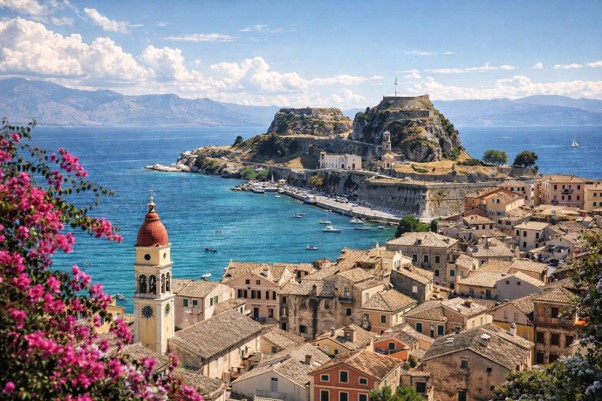
Corfu occupies a different position in this conversation. It is not yet an established ultra-prime market — and that is precisely what makes it interesting for investors with a longer time horizon. Improved infrastructure, growing connectivity, and rising international interest have begun to draw attention to the island’s natural beauty, architectural heritage, and relative affordability compared to the other Mediterranean markets discussed here.
The fundamentals that matter — coastal scarcity, tourism-driven demand, and limited development land — are present. The premium is not yet fully priced in. For investors willing to position ahead of the mainstream, Corfu represents the kind of early-stage opportunity that, in retrospect, tends to define the strongest long-term portfolios.
What These Markets Share
The destinations discussed here are not uniform in character or maturity. What they share are the structural conditions that Unica Capital believes underpin durable long-term value in prime real estate: genuine supply constraints rooted in geography or regulation, proven and growing international demand, lifestyle appeal that transcends economic cycles, and an intrinsic scarcity that cannot be manufactured by development.
These are also markets where the quality of asset selection matters enormously. The difference between a well-located lakefront villa in Bellagio and a peripheral apartment in Como is not merely a matter of preference — it is a fundamental investment distinction. In markets defined by scarcity, the most scarce assets carry the most durable premiums.
Unica Capital’s Perspective
At Unica Capital, we have spent years identifying, financing, and managing real estate opportunities in prime European markets. Our portfolio spans London, Geneva, Gstaad, and Monaco — markets we know in depth, and in which we have built a track record of creating long-term value through careful asset selection, design-led development, and considered management.
Our approach to evaluating emerging markets follows the same discipline. We look for the conditions that have defined the success of our established portfolio locations: restricted supply, exceptional natural or urban settings, sustained international demand, and the kind of architectural and locational quality that holds its value over generations — not just cycles.
The European luxury property map is expanding. For investors and wealth advisors who understand the fundamentals, the opportunity is not simply to follow where capital has gone, but to identify where those same conditions exist before they are universally recognised. That is the work we do — and it is why we remain committed to looking beyond the obvious to find what endures.