



Trophy Assets: Why Luxury Homes Are Becoming a Strategic Alternative Investment
For ultra-high-net-worth investors, the concept of ‘home’ has evolved considerably over the past decade. What was once understood primarily as a lifestyle choice — a place to live, to gather, to retreat — is now increasingly viewed through a strategic lens. Exceptional residences in prime locations have become trophy assets: properties that combine the intrinsic utility of a home with the financial characteristics of a long-term investment. They offer capital preservation, generational wealth potential, and a hedge against financial market volatility, while simultaneously functioning as some of the world’s most extraordinary places to live.
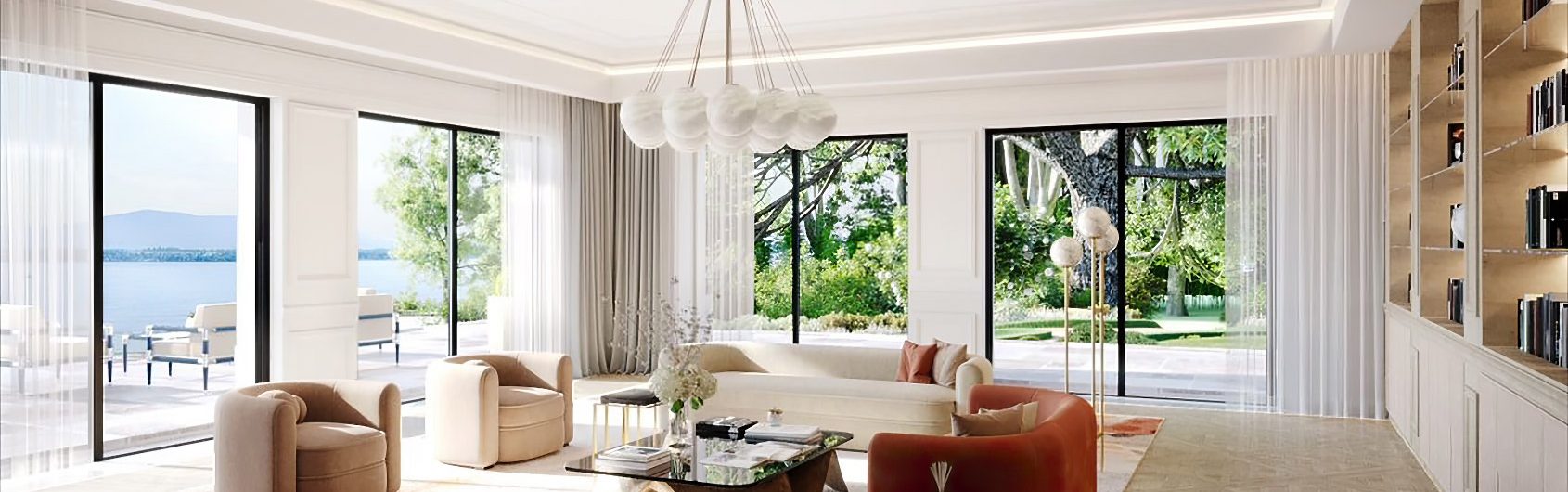
This is not a new phenomenon. The wealthiest families have long held prime real estate alongside art, private equity, and other alternative assets. What has changed is the degree of intentionality. Today’s UHNW investors are thinking about luxury property with the same analytical rigour they apply to their financial portfolios — and for good reason.
The Scale of UHNW Wealth and Its Real Estate Implications
Understanding why trophy real estate matters requires understanding the scale and composition of the UHNW universe. According to Altrata’s World Ultra Wealth Report 2025, there are now approximately 510,810 ultra-high-net-worth individuals worldwide — each with a net worth exceeding $30 million — collectively controlling nearly $60 trillion in wealth. This represents roughly double the annual GDP of the United States. The UHNW cohort accounts for 32.4% of all wealth held by high-net-worth individuals globally, despite representing just 1.1% of that population.
For families operating at this level, traditional portfolio construction frameworks have limited utility. A 60/40 stock-bond allocation does not address the complexities of multi-generational wealth preservation, jurisdictional risk, or the desire to hold assets that are simultaneously functional and financially meaningful. Real estate — particularly prime real estate — fills a structural gap that liquid financial assets cannot. Knight Frank’s Wealth Report 2025 found that 44% of family offices plan to increase their real estate allocations, underscoring a broad and sustained conviction in the asset class.
What Makes a Property a Trophy Asset
Not all luxury property qualifies as a trophy asset in the investment sense. The distinction lies in a combination of factors that, taken together, create a level of scarcity, desirability, and long-term demand that underpins durable capital appreciation.
Location is the most fundamental. Trophy assets occupy positions that cannot be replicated — a lakefront setting in Geneva, a clifftop estate on the Costa Smeralda, a historic townhouse in Mayfair, or an alpine chalet in Gstaad. These are places where the underlying land carries intrinsic value that is entirely independent of the structure built upon it, and where planning restrictions ensure that supply can never meaningfully expand to meet demand.
Architectural distinction is the second pillar. The most valuable residential assets in the world share a commitment to design quality, material excellence, and spatial intelligence. They are properties built not to the prevailing standard of their time, but to a standard that endures beyond it. This is a dimension that separates genuinely irreplaceable assets from properties that are merely expensive. At Unica Capital, this conviction shapes every project we undertake — from the wellness-integrated design of Chalet Oberbort in Gstaad to the architectural ambition of O’Belmont by Jean Nouvel in Geneva, where stone, wood, and marble are brought together under the direction of one of the world’s most respected architects.
Scale and scarcity complete the picture. The most sought-after trophy assets are singular in character — either in their size, their provenance, or their combination of qualities. They are properties for which there is no direct substitute, and that quality is precisely what sustains their value through market cycles.
Real Estate in the Context of Alternative Investment
To appreciate the investment case for trophy real estate, it is worth considering how it compares to the other categories of alternative investment commonly held within UHNW portfolios.
Fine art commands significant attention among collectors and investors. The global art market generates substantial transaction volumes annually, and exceptional works from established artists have demonstrated meaningful long-term appreciation. However, art carries significant risks that real estate does not: pricing is opaque and highly subjective, liquidity is limited outside major auction cycles, and the asset provides no utility beyond its aesthetic or cultural value. Storage, insurance, authentication, and provenance create ongoing costs and complexity.
Classic cars and rare collectibles share some of the appreciation characteristics of art, but with even greater liquidity constraints and higher ongoing maintenance costs. Yachts — perhaps the most aspirational of lifestyle assets — are straightforwardly depreciating assets. The operational costs of a luxury yacht routinely represent 10–15% of its purchase value annually, and resale values decline consistently over time. Neither category provides the capital preservation characteristics that define a genuine long-term investment.
Private equity and venture capital have delivered strong historical returns — private equity has historically outpaced public markets by two to four percentage points annually — but these strategies require complete illiquidity over lock-up periods of seven to ten years, carry substantial concentration risk in early-stage cycles, and provide no utility to the investor beyond financial return.
Prime real estate occupies a different category entirely. It combines the intrinsic utility of a home — which is not a trivial consideration for families seeking both financial and lifestyle value — with capital preservation characteristics, tangible asset ownership, and a form of scarcity that is genuinely structural rather than artificially maintained. According to Knight Frank’s Global Super-Prime Intelligence data, transactions above $10 million increased in value by 33% globally in Q2 2025 compared to the prior year, reflecting renewed and deepening conviction at the top
end of the market.
Capital Preservation and the Scarcity Premium
The most consistent investment characteristic of trophy real estate — the one that persists across economic cycles, interest rate environments, and geopolitical shifts — is the scarcity premium. In prime locations, supply is fixed. The number of lakefront metres on Lake Geneva will not increase. The hectares of protected coastline on Sardinia’s Costa Smeralda are already fully mapped. The heritage townhouses of Mayfair were built in the eighteenth and nineteenth centuries and will not be replicated.
This structural scarcity creates a fundamental imbalance between supply and demand that, in the very best locations, has only widened over time. The global UHNW population is forecast by Altrata to grow to 676,970 individuals by 2030 — an increase of 31% from mid-2025. The supply of genuinely irreplaceable prime real estate will not grow at all. The investment logic, at this level, is straightforward.
This is reinforced by the performance data. Prices in St. Tropez have risen by more than 30% over the past decade, with villa values reaching an average of approximately €21,000 per square metre. Prime residential prices in Costa Smeralda increased by 18% in 2023 alone. Lake Como luxury values have appreciated consistently, with prime properties regularly achieving €10,000–€15,000 per square
metre in the most coveted locations. These are markets where the long-term direction of capital is structurally determined, not cyclically influenced.
Multi-Generational Wealth and the Legacy Dimension
Perhaps the most underappreciated dimension of trophy real estate as an investment is its multi-generational character. For UHNW families, the question is rarely ‘what will this be worth in five years?’ It is ‘what kind of asset will this become for the next generation, and the one after that?’
A prime property in an exceptional location — particularly one defined by architectural distinction and material quality — is not merely a financial asset. It is a place. It carries the memory of time spent, the identity of a family’s values and aesthetic, and the continuity of a long-term relationship with a location. These are qualities that appreciate in ways that no financial model fully captures, and they are qualities that the most enduring family fortunes have understood intuitively for generations.
Luxury real estate held over two or three generations in the right location does not merely preserve capital. It becomes a legacy — a tangible expression of long-term thinking, designed for those who will inherit it as much as for those who first acquire it.
Yield Potential and the Rental Dimension
While capital preservation and lifestyle value are the primary drivers for most UHNW buyers of trophy real estate, it is worth noting that the finest properties in prime locations also carry meaningful income potential. In St. Tropez, high-end villas commonly achieve €20,000 to €50,000 per week during peak summer season, generating short-term rental yields of 5–10% annually for well-managed properties.
In Sardinia’s Costa Smeralda, prime rental rates have doubled since 2019 in the most sought-after locations. In Switzerland’s most desirable alpine markets, occupancy among luxury chalet operators remains consistently strong.
Rental income is rarely the primary motivation for investors at this level — and nor should it be, since yield optimisation can conflict with the long-term preservation of asset quality. But the income potential adds a further dimension to the investment case, particularly for family offices and wealth managers seeking diversified return streams within a broader alternative allocation.
Unica Capital’s Approach
At Unica Capital, we have built our portfolio around a clear and consistent philosophy: that the most enduring investment in real estate is one in which exceptional location, design-led execution, and long-term thinking converge. Our assets — from Villa Carinthia on the shores of Lake Geneva to Chalet Oberbort in Gstaad, from our commercial portfolio in Mayfair and Soho to Villa Odile in Monaco
— are selected and developed with a view that extends well beyond the current cycle.
We believe that the properties which preserve and grow capital most reliably over time are those in which scarcity, quality, and place are held in deliberate balance. These are not properties built to a market moment. They are built to a standard of permanence — designed to be lived in, invested in, and passed on.
The distinction between a residence and a trophy asset is ultimately one of intention and execution. When both are present, the investment case for prime real estate is among the most compelling available to any serious long-term portfolio. That is the conviction that drives every decision at Unica Capital — and it is why we continue to focus, without compromise, on the properties and locations that will endure.