



Built to Last: How Ultra-High-Net-Worth Families Use Ultra-Prime Real Estate to Transfer Wealth Across Generations
For the world’s wealthiest families, the question of how to preserve and pass on capital across generations is one of the most consequential they will ever face. Trusts, family limited partnerships, private equity structures – the range of tools available is broad and well understood. Yet when you look closely at the portfolios of families who have successfully maintained their wealth across multiple generations, one asset class appears with remarkable consistency: prime real estate in the right locations.
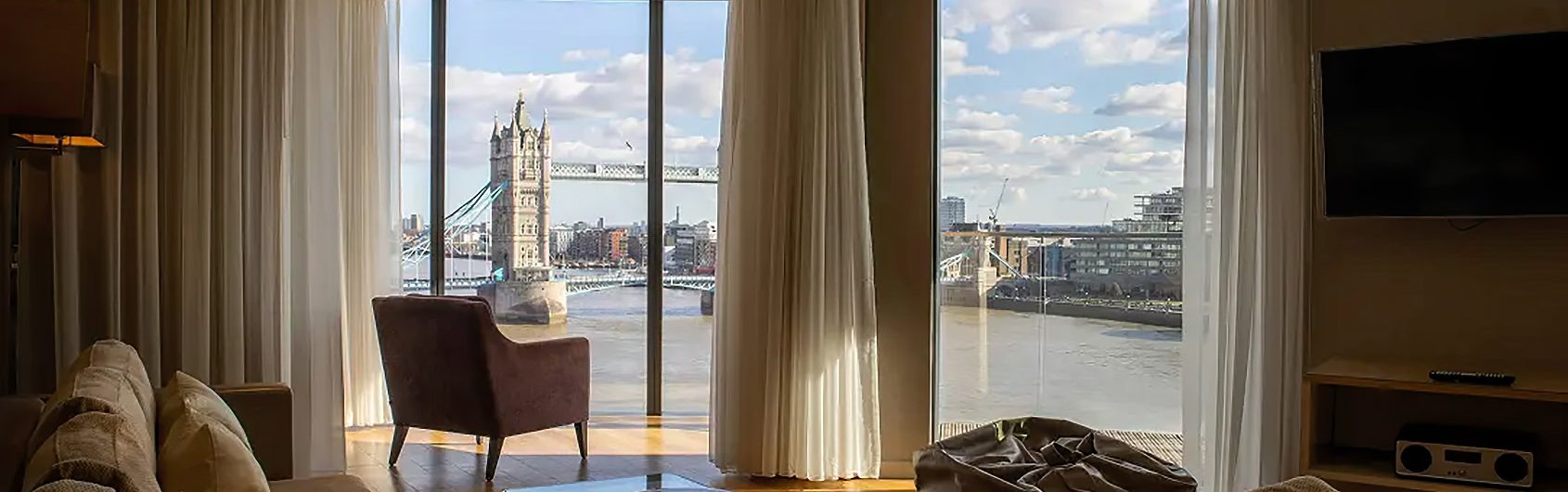
This is not a coincidence. It reflects something structural – a set of qualities that prime property possesses that other asset classes do not. At Unica Capital, we work with families who understand this. And the data, from some of the most authoritative sources in global wealth management, increasingly confirms what experienced investors have long known: the right property in the right place is not simply a home. It is one of the most enduring wealth transfer vehicles a family can hold.
The Scale of What Is Being Transferred
Before examining why prime real estate plays such a central role in generational wealth planning, it is worth understanding the scale of the challenge it is helping to solve.
According to research from Cerulli Associates, an estimated $84 trillion will change hands between now and 2045 – the largest intergenerational transfer of assets in history. The families navigating this transfer are doing so in an environment of significant complexity: shifting tax regimes, geopolitical uncertainty, multi-jurisdictional holdings, and rising generations with different priorities and risk tolerances than their predecessors.
The response from family offices has been clear. According to Knight Frank’s Wealth Report 2025 – one of the most comprehensive annual analyses of private wealth and real estate globally – direct real estate already accounts for 22.5% of the typical family office portfolio. More significantly, 44% of family offices surveyed indicated they intend to increase their real estate allocation over the next 18 months. Among those family offices that already manage private residential portfolios, nearly a quarter are actively considering new acquisitions.
This is not a trend driven by sentiment. It is a structural response to the limitations of other asset classes when measured against the specific demands of multi-generational wealth transfer.
Why Ultra-Prime Property Works Across Generations
Capital Preservation With Tangible Utility
The most fundamental advantage of ultra-prime real estate over other alternative assets is a simple one: you can live in it. Art, private equity, and collectibles all offer potential appreciation, but they do not function as homes. Ultra-prime property does both simultaneously – it preserves and grows capital while serving as a place for families to gather, live, and build shared experience.
This dual utility matters more than it is often given credit for. A family that holds a significant lakefront estate in Geneva or a carefully restored townhouse in Mayfair is not simply holding a financial instrument. They are holding a place that carries meaning across generations – that becomes, over decades, a repository of family memory as well as family capital. That emotional dimension is not incidental to the investment case. It is part of what sustains demand, and therefore value, in the very best locations.
Structural Scarcity That Cannot Be Manufactured
The second structural advantage is scarcity. In the markets where Unica Capital operates – London, Geneva, the Swiss Alps, and Monaco – the supply of ultra-prime real estate is genuinely finite. It cannot be expanded by developers, replicated by new construction, or diluted by changing fashions. In Monaco, the land constraint is absolute. In Gstaad, strict planning regulations ensure that the character and exclusivity of the built environment is preserved. Along the Swiss lakefront, planning frameworks prevent the kind of overdevelopment that has diminished value in other European markets.
This means that when a family acquires an ultra-prime asset in one of these locations, they are acquiring something that will not become less scarce over time. The opposite is true: as international wealth continues to grow and the number of families competing for a fixed supply of exceptional assets increases, the structural conditions that underpin long-term value only strengthen.
Knight Frank’s research consistently shows that prime residential markets in tightly constrained locations – London’s Mayfair and Knightsbridge, Geneva’s lakefront, the most coveted Alpine destinations – have delivered consistent, long-term capital appreciation that outperforms broad market benchmarks over extended holding periods.
Legal Certainty and Jurisdictional Stability
For families managing wealth across multiple jurisdictions, the legal and regulatory environment of a property market is as important as the asset itself. This is an area where the markets Unica focuses on offer a distinct advantage.
Switzerland, where Unica holds significant residential assets including Villa Carinthia in Founex and projects in Gstaad, offers a level of legal certainty, political neutrality, and currency stability that is unmatched in Europe. Swiss property law is well-established, the franc is historically resilient, and the country’s political environment has demonstrated decade after decade of continuity. For families looking to hold assets across generations, these are not peripheral considerations – they are foundational.
London, despite the political noise of recent years, remains one of the world’s deepest and most liquid prime property markets, underpinned by common law property rights, transparent transaction processes, and a concentration of global capital, education, and culture that continues to attract the wealthiest families in the world. Mayfair, where Unica holds commercial assets on Cork Street, and the surrounding prime residential areas remain consistently among the top destinations for UHNW property acquisition.
Monaco, where Unica is currently developing Le Montaigne Penthouse, offers its own distinct advantages: zero property tax, no inheritance tax for direct descendants, and absolute land scarcity that ensures the principality remains among the most desirable and value-preserving real estate environments on the planet.
A Hedge Against Financial Market Volatility
The generational wealth transfer conversation is happening in a context of genuine uncertainty. Geopolitical volatility, interest rate cycles, currency fluctuation, and the increasing complexity of global financial markets mean that families managing long-term portfolios require assets that can absorb and weather economic cycles without catastrophic loss of value.
Ultra-prime real estate in stable, supply-constrained markets has historically performed this function better than almost any other asset class over long holding periods. It does not suffer the mark-to-market volatility of listed equities. It is not exposed to the liquidity pressures that can affect private equity during downturns. And in the right locations, it tends to find its floor quickly during periods of market stress – because the buyer pool for the finest assets in the finest places is genuinely global and structurally insulated from short-term economic pressures.
According to InvestmentNews, UHNW families in 2025 increasingly prioritised assets offering “control, visibility, and downside protection” in response to shifting geopolitical conditions – characteristics that ultra-prime real estate, held across the right portfolio of jurisdictions, delivers structurally.
The Role of Location in Generational Value Creation
Not all property works as a generational asset. The families that have built the most enduring real estate legacies understand that location is not simply about where a property is – it is about the underlying conditions that will sustain demand, protect value, and make the asset relevant decades from now.
At Unica Capital, the framework we apply to every acquisition begins with a consistent set of questions. Is this a location where supply is genuinely constrained, by regulation, geography, or both? Is international demand structural and sustained, or is it driven by a cyclical trend that may reverse? Does the property possess an architectural and spatial quality that will remain desirable as tastes evolve? And does the jurisdiction in which it sits offer the legal certainty and stability that long-term holding requires?
London, Geneva, Gstaad, and Monaco pass each of these tests with a consistency that few other markets can match. They are not fashionable destinations. They are permanent ones – places that have drawn the world’s most discerning families for generations, and that show no structural signs of losing that appeal.
Villa Carinthia on the shores of Lake Geneva is a clear expression of this thinking. Its location in Founex offers scale that cannot be replicated – lakefront land of this proportion, with uninterrupted water frontage and the privacy that discerning buyers prioritise, is not a product the Geneva market can produce again. It is the kind of asset that a family acquires once and holds across decades.
Chalet Oberbort in Gstaad is another. The world’s largest private chalet, set within the Oberbort enclave – one of the most tightly held addresses in the Swiss Alps – it is an asset defined both by its extraordinary scale and by the planning certainty that ensures its setting will not be diminished. Gstaad’s strict development regulations have maintained the character of the village and its surroundings for generations. They will continue to do so.
Passing It On: The Practical Dimension
For all the philosophical arguments in favour of ultra-prime real estate as a generational asset, the practical dimension matters too. How does property held across jurisdictions interact with estate planning structures? How do families ensure that the emotional and financial value of a prime asset is preserved through succession?
These are questions that Unica Capital works through in partnership with the families we serve. The answers are jurisdiction-specific and structure-dependent – but some principles apply broadly.
Holding ultra-prime assets within appropriate legal structures – Swiss holding companies, UK trust arrangements, Monegasque estate frameworks – can significantly reduce the complexity and cost of cross-generational transfer. The permanence of legislation such as the One Big Beautiful Bill Act in the United States, which permanently increased estate tax exclusions to $15 million per individual from 2026, signals a broader political direction that favours the retention and transfer of substantial asset bases across generations.
The Bank of America Private Bank’s Family Office Study found that 87% of family offices have yet to pass leadership to younger generations, but 59% expect that transition within the next decade. As that handover accelerates, the families best positioned will be those whose assets are held in the right structures, in the right markets, in properties with the combination of financial resilience and emotional permanence that prime real estate uniquely provides.
What Endures
The families that have built the most durable multi-generational wealth share a particular quality in how they think about real estate. They do not approach it as a trade. They approach it as a foundation – something built to last, in a location that will remain desirable long after the economic conditions of today are a footnote.
At Unica Capital, we share that perspective. Our portfolio spans London, Geneva, the Swiss Alps, and Monaco – markets chosen precisely because they combine the conditions that sustain long-term value: genuine scarcity, legal certainty, sustained international demand, and an irreplaceability that cannot be manufactured.
The right property in the right place is not just an asset. It is a statement of intent – a decision to build something that your children, and their children, will still want to hold.
That is what we help families do.