

The Privacy Premium: Why the World’s Wealthiest Families Are Paying More for Seclusion
There is a quality that cannot be added to a property after the fact. You cannot retrofit it. You cannot renovate your way to it. And in an era of rising visibility, accelerating digital exposure, and growing geopolitical complexity, the world’s wealthiest families are beginning to treat it with the same rigour they apply to any other investment consideration.
That quality is privacy.
At Unica Capital, we have long understood that seclusion is not a lifestyle amenity. It is a structural attribute – one that shapes the long-term desirability of a location, the resilience of its values, and the depth of demand from the buyers who matter most. What is changing is the degree to which the broader market is catching up to this view.
A Shift in What Wealth Looks For
For decades, the language of ultra-prime real estate was built around visibility. Grand addresses. Landmark buildings. Properties that announced themselves. That era has not ended, but it has been complicated – by security concerns, by digital exposure, and by a generation of ultra-high-net-worth families that has come to value discretion as much as distinction.
The shift is documented clearly in Altrata’s Residential Real Estate 2025 report, one of the most comprehensive analyses of UHNW property behaviour published this year. The report is unambiguous: affluent families are no longer driven solely by lifestyle or prestige. They focus on security, legal reliability, and long-term strategy. Privacy – understood not merely as physical seclusion but as a complete set of protections around how a family lives, moves, and is seen – has moved from preference to priority.
This is supported by the broader numbers. According to Altrata’s World Ultra Wealth Report 2025, there are now 510,810 ultra-high-net-worth individuals globally, each with a net worth in excess of $30 million, controlling a combined $59.8 trillion in wealth. This population has grown seven times faster than the global adult population over the past two decades – and by 2030, Altrata forecasts it will reach 676,970 individuals, an increase of 31% from today. As that population grows, so does the pressure on the finite supply of addresses that can genuinely meet their expectations.
The global private security market reflects this directly. Valued at $241.4 billion in 2022, it is projected to reach $531.5 billion by 2032 – growth driven in significant part by demand for integrated residential security solutions from the world’s wealthiest buyers. Security, in its most comprehensive sense, has become a defining criterion in the acquisition decisions of UHNW families.
What Privacy Actually Means at This Level
It is worth being precise about what privacy means in the context of ultra-prime real estate, because it is a more layered concept than it is often given credit for.
At the most fundamental level, it is physical: the distance between a property and its neighbours, the height and density of surrounding vegetation, the absence of overlooking windows, the quality of access control. Properties where the grounds are genuinely extensive – where arrival and departure happen unobserved, where the garden or terrace cannot be seen from a public road – command a structural premium over those that are merely large.
But privacy at the UHNW level extends beyond the physical. It encompasses the discretion of the transaction itself – whether a property reaches the open market or trades quietly through a trusted network. It includes the legal environment of the jurisdiction: whether ownership can be structured discreetly, whether the regulatory framework protects rather than exposes. And it includes the character of the neighbourhood: whether the surrounding community values and reinforces the same standards of privacy that the property itself provides.
According to Knight Frank’s Prime Residential Property Index 2026, buyers at the top of the market are increasingly willing to pay premiums for privacy and high-quality amenities – with demand for turnkey, move-in-ready homes that require no public exposure through construction or renovation becoming one of the defining trends at the ultra-prime level.
The Locations That Deliver – and Why
Not every prestigious market is a private one. Some of the world’s most celebrated addresses are, by their nature, public-facing: city apartments with shared lobbies, properties on heavily visited coastlines, residences in neighbourhoods that attract attention precisely because of their cachet. Privacy and prestige can coexist, but they require specific conditions.
The markets where Unica Capital has concentrated its portfolio – Gstaad and the Swiss lakefront around Geneva – deliver both. And they do so for structural reasons, not incidental ones.
Gstaad
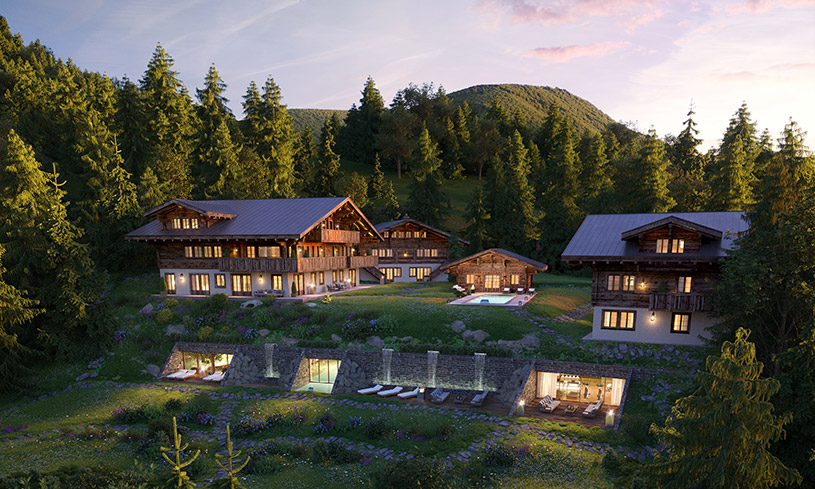
Gstaad is one of the most discreet luxury destinations in the world. Its planning regulations are among the strictest in Switzerland: new construction is tightly controlled, building heights are limited, and the character of the village and its surrounding enclave addresses has been preserved across generations. This is not simply a planning success story – it is what has made Gstaad consistently attractive to the world’s most private buyers for over a century.
The Oberbort enclave, where Unica’s Chalet Oberbort is situated, is among the most tightly held addresses in the Alps. Properties here do not reach the open market in the conventional sense. They trade through relationships, within a community of owners who share an understanding of what makes this address exceptional – and an interest in preserving it. The result is a market characterised by genuine scarcity, genuine discretion, and a level of capital permanence that few alpine destinations can match.
Chalet Oberbort itself – the world’s largest private chalet at over 6,500 square metres across three interconnected structures – exemplifies what privacy at this level requires: extensive grounds within a private enclave, controlled access, a spatial scale that ensures no aspect of daily life is visible beyond the property’s own boundaries.
The Swiss Lakefront – Founex and Geneva
Geneva’s position as a global financial centre, home to international institutions and the world’s most significant concentration of private wealth management, makes it a natural address for UHNW families. But it is the lakefront villages – Founex, Cologny, Vandoeuvres – that deliver the privacy that the city itself cannot.
Here, the planning framework along the Swiss lakefront has prevented the kind of densification that diminishes privacy in other European markets. Lakefront land of genuine scale – with direct water access, extensive grounds, and the distance from neighbours that meaningful privacy requires – is among the scarcest residential asset classes in Europe.
Altrata’s data confirms Geneva’s density of ultra-wealth: with one UHNW individual for every 225 residents, it is one of the highest concentrations of ultra-wealthy residents of any city in the world. That density of discerning buyers, combined with a structurally constrained supply of genuinely private addresses, is precisely what underpins long-term value.
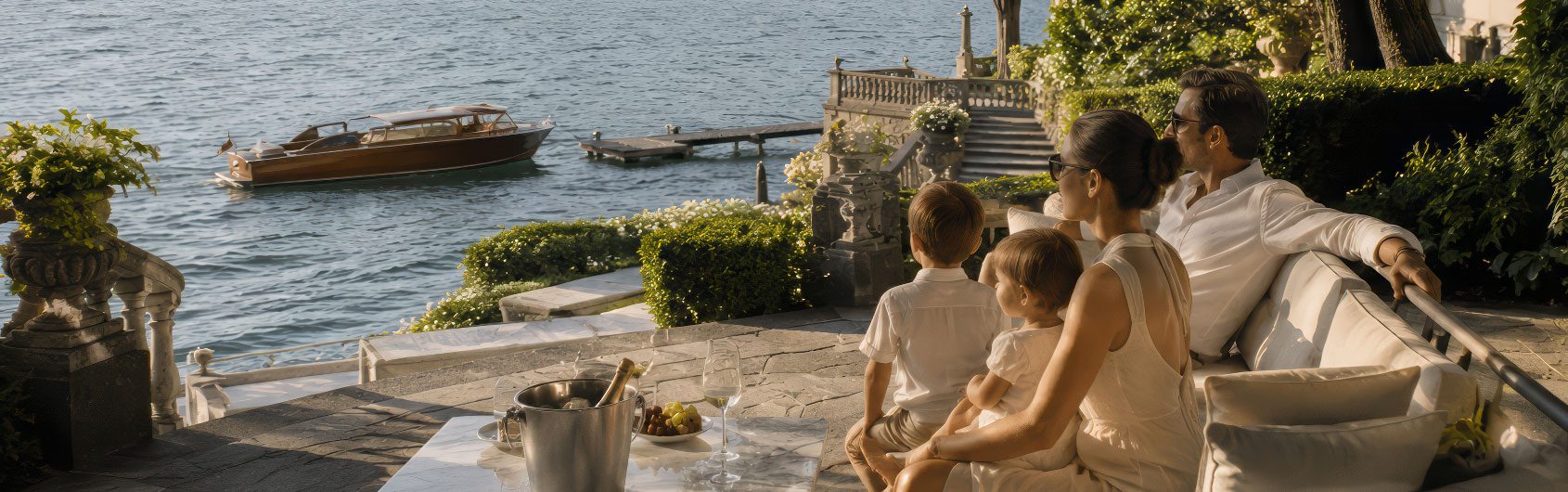
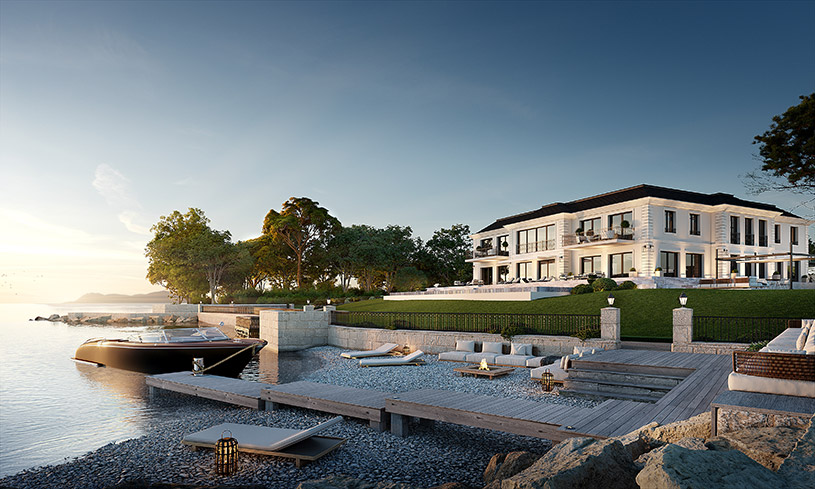
Unica Capital’s Villa Carinthia in Founex sits within this context: a lakefront estate of a scale and privacy that the Geneva market cannot replicate. Uninterrupted water frontage, grounds that ensure complete visual separation from the public road, and a location in one of the most discreet residential communities on the lake make it the kind of asset that comes to market once and is held for decades.
Privacy as an Investment Consideration
The case for privacy as a structural investment driver is not simply qualitative. It has a measurable impact on the dynamics of demand – and therefore on long-term value.
Properties that deliver genuine privacy attract a pool of buyers for whom it is non-negotiable. That pool is global, well-capitalised, and growing. It is also, by its nature, less sensitive to cyclical economic pressures than the broader market – because the buyers it comprises are making long-term decisions about where to live and hold capital, not short-term speculative plays.
Super-prime home sales – transactions above $10 million – rose by approximately 33% globally in 2025, according to Knight Frank data. At the very top of that market, where privacy is truly deliverable, the dynamic is even more pronounced: the combination of growing UHNW wealth, structurally constrained supply, and intensifying demand for secure, discreet addresses creates conditions in which the finest assets in the finest locations face sustained upward pressure.
There is also a liquidity argument. Properties that offer genuine privacy – in jurisdictions with the legal certainty to protect it, in locations with the physical conditions to deliver it – do not sit on the market. They transact quickly, discreetly, and at prices that reflect the understanding between buyer and seller that what is being exchanged is irreplaceable.
What Endures
The world has become more complex, more connected, and more exposed. The response of the world’s most discerning families has been to place an increasingly high value on the things that complexity cannot provide: space, stillness, security, and the right to live privately.
At Unica Capital, we have always selected assets and locations with this understanding at the core of our investment thesis. The markets we operate in – – are not simply prestigious. They are private in ways that can be sustained across decades, because their planning frameworks, legal environments, and community character are structured to preserve that quality.
Privacy, in prime real estate, is not an amenity. It is a foundation. And in a world where it is becoming rarer, its value only compounds.