
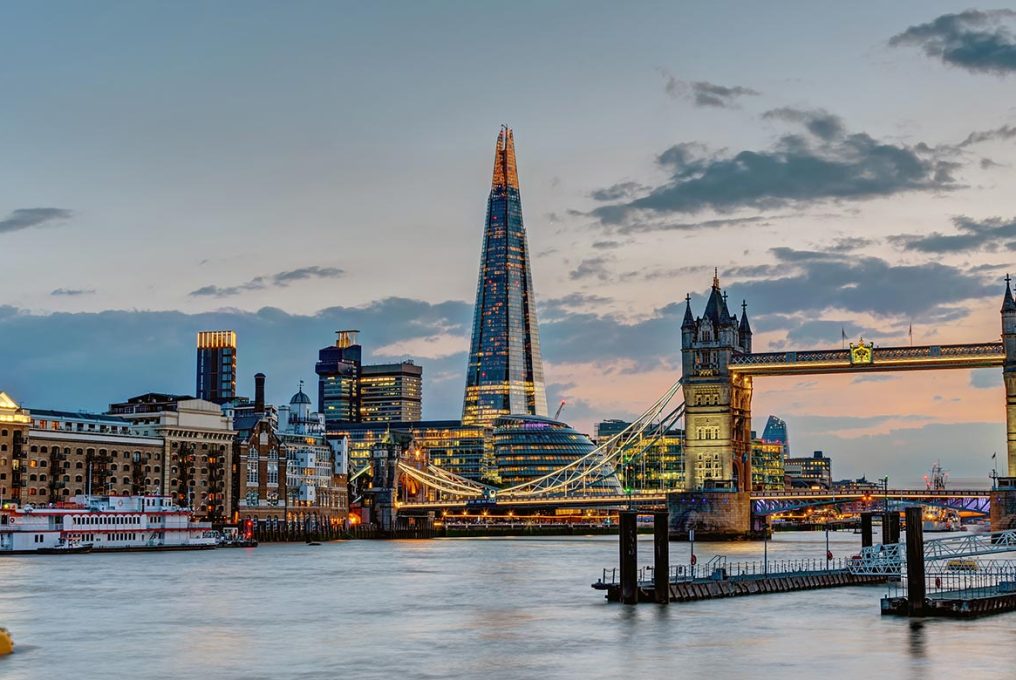
In today’s world of shifting currency dynamics, sluggish global growth, elevated inflation and geopolitical uncertainty, the universal challenge for the ultra-wealthy remains the same: how to preserve capital, hedge risk and invest in assets that deliver more than mere speculation. With interest rates volatile and many financial markets reflecting heightened risk rather than refuge, tangible real assets are once again turning the spotlight of global capital.


At the heart of this rethink, two European real estate markets consistently stand out: London and Switzerland. These markets may not always deliver explosive growth, but they offer something arguably more important to the global investor: deep liquidity, legal certainty, strong institutional frameworks and the reputational “safety” that comes with addresses few other markets can match.
For investors working with Unica Capital, who demand not just returns but long-term preservation of wealth, the comparison between these two jurisdictions – each with its own distinctive characteristics – reveals why the “Euro-safe haven” narrative remains compelling.
In this piece we compare why London’s prime luxury market and Switzerland’s high-end real estate continue to attract capital from family offices, cross-border advisors and UHNW individuals. We explore their appeal, yield and capital-security characteristics, and why in a world of uncertainty the old adage still holds: real assets beat volatile financial instruments when wealth preservation is the objective.
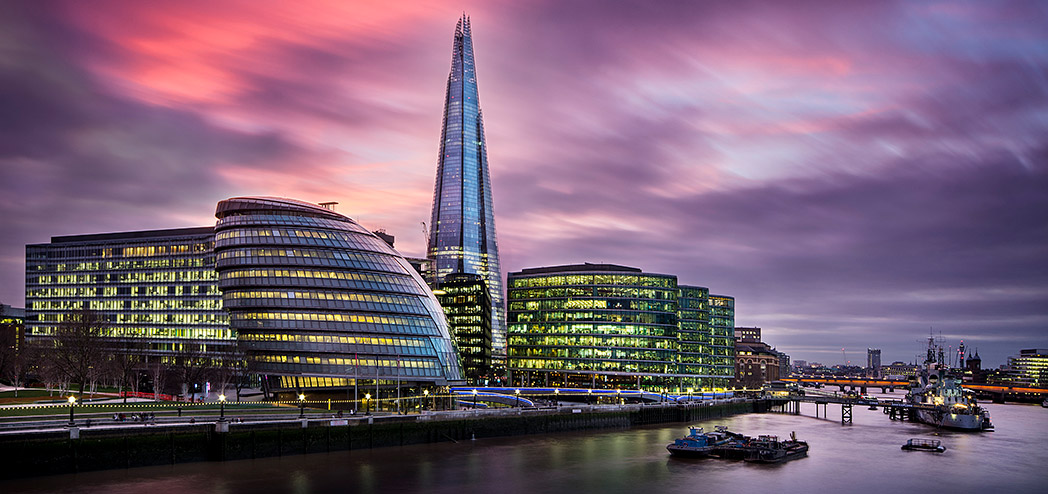
1. London’s Resilient Appeal
Deep liquidity and global profile
London may have endured turbulence since Brexit and has seen tax and regulatory head-winds, yet it remains a pre-eminent global city, with unmatched connectivity, robust legal systems, world-class education (think Eton, Harrow, London’s universities) and a built-heritage stock that few cities can match. As one expert put it: “London’s allure for the super-rich is far more robust than any single policy change.”
For UHNW investors with multi-country portfolios, London offers something extremely rare: the ability to enter and exit at scale, with trusted intermediaries, a depth of institutional demand (both domestic and international) and a track-record of capital preservation even in downturns. The heritage architecture of Mayfair, Chelsea, Belgravia or Kensington similarly appeals to those investing not solely for return, but for legacy, prestige and diversification.
Post-Brexit, prime zones remain resilient
Since the UK left the EU, some investors questioned London’s long-term appeal. However, the prime sectors have shown remarkable stability. According to the latest data, price growth in Prime Central London (PCL) in Q1 2025 stood at –0.7 % quarterly and –2.6 % on an annual basis — a modest contraction in the context of recent global shocks.
Crucially, while headline growth is muted, rental demand in London’s prime zones remains robust. The deeply global board of tenants, strong demand from corporate occupiers and the institutional-level appetite for high-end homes all contribute to a market that doesn’t collapse overnight. CBRE forecasts prime rental growth in 2025 of about 6 % across UK markets, supported by declining inflation and interest rate cuts.
Why London remains a “safe haven” for wealth preservation
– Currency exposure: For investors whose base currency is non-GBP, London property offers a hedge against currency depreciation in weaker-zone currencies (particularly pertinent for US $/EUR-based portfolios).
– Reputational value: Holding a London address – especially in zones such as Mayfair, Chelsea or Belgravia – provides credibility, legacy branding and a tangible anchor for ultra-wealth portfolios.
– Liquidity and exit options: Despite some slowdown, London’s international buyer base and mature market structure still mean that exits (though sometimes slower) remain viable.
– Short supply: Many of the prime assets are rare, historic, or heavily regulated – giving them a scarcity premium that supports value even in weaker markets.
In short, for investors not chasing high-beta growth but targeting capital preservation, income stability and reputation, London remains compelling.
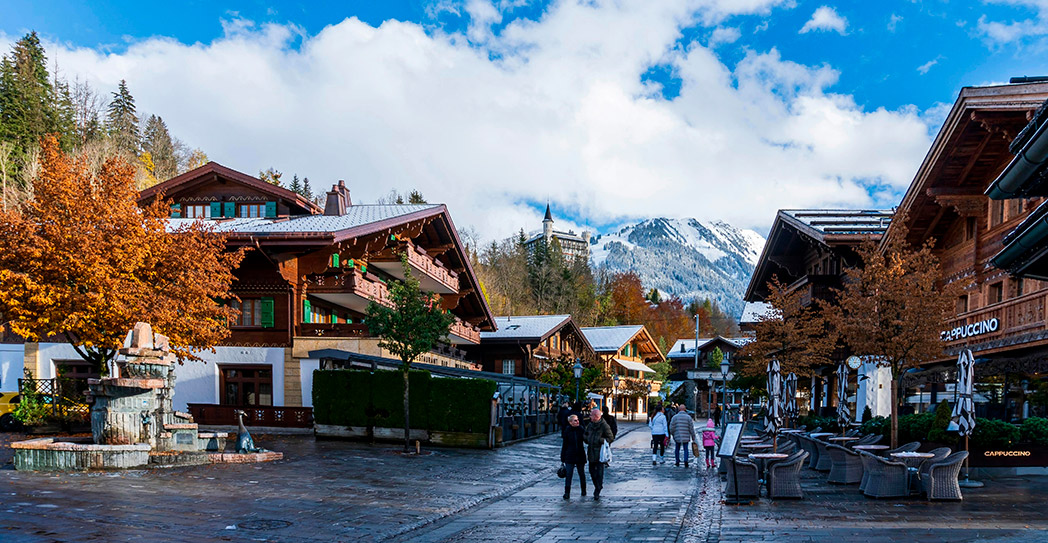
2. Switzerland’s Enduring Stability
A unique value proposition for UHNW investors
If London provides the trophy urban asset, Switzerland offers something closer to the cottage-industry of wealth preservation: extreme legal and fiscal stability, a culture of privacy, ultra-high-quality construction and a landscape of luxury that combines urban hubs with alpine retreats.
From tax incentives (depending on canton), to strong local institutions, to the fact that Switzerland has long been viewed as a safe-haven jurisdiction in global capital flows, the Swiss luxury real-estate market has distinct appeal for family offices and global wealth managers seeking diversification away from Anglo-Saxon markets.
Spotlight on Zurich, Geneva and the Alpine luxury markets
Zurich & Geneva
In Zurich, property prices have risen by approximately 4-5% over the past year, with forecast growth of 2.5-4% through 2026. Rental yields in Switzerland remain low in premium locations – for example in Zurich and Geneva gross rental yields often fall in the 2.0% to 3.8% range. Whilst yields are modest, the investor trade-off is clearly the “premium of stability” rather than chasing high income.
In Zurich, foreign-national property purchases rose 6% in 2024, underlining the global capital draw.
Alpine luxury markets
Beyond Zurich and Geneva, the Swiss high-end market extends deep into the alpine heartlands, where resorts such as St Moritz, Gstaad, and Crans-Montana continue to set global benchmarks for luxury living. Each embodies a distinctive expression of Swiss refinement – St Moritz with its cosmopolitan glamour and art-world clientele, Gstaad with its understated exclusivity and tradition of privacy, and Crans-Montana with its panoramic appeal and year-round vibrancy.
While publicly available yield data for these ultra-prime enclaves are limited, the investment thesis is clear. These locations combine capital-preservation characteristics with an irreplaceable lifestyle dividend. For UHNW families, owning in the Swiss Alps is not merely a financial hedge – it is a multi-generational asset that delivers security, legacy, and the rare privilege of a foothold in some of Europe’s most coveted landscapes.
Why Switzerland remains a wealth-preservation stronghold
– Legal & fiscal clarity: Switzerland’s institutions are stable, governance strong, and the regulatory environment familiar to global advisors.
– Currency resilience: The Swiss franc remains a reference currency for global investors; property in Swiss francs provides a hedge against weaker currencies elsewhere.
– Lifestyle plus yield: For many UHNW investors the combination of “home base + investment” is compelling – Swiss luxury property offers these together.
– Low volatility: With modest growth, shallow yield expectations and limited leverage, the Swiss market tends to trade in calmer waters – which is precisely the point for preservation-oriented capital.
3. Comparing Yields and Capital Security
For a preservation-first investor, yield is only part of the story. Capital security, volatility, currency risk and exit options matter equally.
Conservative appreciation and low volatility
In London’s prime zones, recent data suggest a very modest growth trajectory: Knight Frank forecasts roughly 2% growth over the next 12 months in prime central London. By contrast, the Swiss luxury markets show similarly modest growth – for instance Zurich is forecast at 2.5-4% through 2026.
Such muted but stable growth is precisely what wealth-preservation investors seek: you are not aiming for 20 % annual returns, but for 3-5 % growth with minimal downside.
Rental yield and income characteristics
Yield in Switzerland – especially in premium urban cores – is low: around 2.0-3.8% gross. In London, rental yields remain under pressure in prime zones, but London still benefits from global tenant demand, particularly for family homes and corporate expatriates. For example, CBRE forecast rising rental growth in 2025 (≈6 %) across the UK prime sector.
Hedging currency risk and inflation
Both markets offer meaningful hedges:
• Currency: Holding assets in GBP or CHF means a diversification away from, say, USD or EUR risk.
• Inflation/interest rate: Both jurisdictions have strong institutional frameworks – in Switzerland inflation has remained very low, and interest-rate cuts are underway, giving property an edge versus bonds (see Swiss rate cut to 0.5% in Dec 2024).
• Scarceness of supply: In both markets the ultra-prime inventory is finite, which supports preservation of value even in softer markets. For example, London’s super-prime offering remains limited, and Switzerland’s alpine resort stock is by definition constrained.
Capital security through transparency and exit options
For global family offices and cross-border advisors, exit strategy is critical. London remains a global hub for international capital flows and secondary market activity, meaning liquidity remains higher than many other European markets. Switzerland, while somewhat less liquid in ultra-prime segments, benefits from long-term hold-strategies and owners are often less compelled to sell in downturns – contributing to price stability.
4. Why Core Still Wins
In luxury real estate, the adage “core still wins” could hardly be more appropriate. For the investor whose objective is capital preservation, the premium paid for ‘core’ quality – top-tier address, heritage architecture, global tenant/owner profile, minimal obsolescence risk – often proves to be the wisest decision.
Short supply, institutional buyer confidence
Whether it’s London’s Georgian townhouses in Mayfair or Swiss chalets in Gstaad, the core trophy-asset segment is characterised by scarcity. Institutional investors and UHNW buyers remain confident in these segments, because they understand that when macro volatility returns, buyers seek safe havens first. Reports note that in London, despite pricing pressures, global buyers are still drawn to the UK’s trophy real-estate market.
The emotional and reputational “safety” of the address
To many family offices, real estate isn’t just an investment – it’s a legacy anchor. Holding a home in London’s historic boroughs or a chalet in Switzerland’s high-alpine resorts provides a human dimension to wealth preservation: a place for family, a long-term physical stake beyond financial markets. As one luxury-property analyst put it: “The lifestyle that a Prime Central London address gives a buyer is … truly unique.”
Practical considerations for UHNW investors
• Hold period: Core investments work best when viewed over a 10-15 year plus horizon. Short-term flip logic doesn’t apply in this category.
• Currency diversification: For non-GBP or non-CHF investors, the dual-market strategy (London + Switzerland) provides currency diversification alongside property diversification.
• Family-office structuring: Ownership vehicles, trusts, partnership structures, tax regimes all matter. Unica Capital’s expertise lies in identifying, financing and managing these unmatched opportunities – and ensuring they align with your exacting multi-jurisdictional requirements.
• Exit planning: While liquidity exists, trophy assets often require time to transact gracefully. Building the exit or generational-handover plan at acquisition is wise.
Conclusion: From Preservation to Purpose
In an era where headline valuations swing rapidly, currencies wobble and traditional asset classes deliver more noise than security, the ultra-wealthy are increasingly gravitating back toward real estate – but with a new mindset. It is no longer simply about chasing capital gain. It is about preserving value, diversifying risk, anchoring legacy, supporting family wealth and privileging physical assets with enduring appeal.
For the investor who desires more than quick profits, the objective is clear: invest where the address speaks volumes, where supply is limited, where legal and institutional structures are robust, and where the outcome is capital that endures. In this respect, London and Switzerland remain two of the most resilient European markets for wealth preservation.
At Unica Capital, we specialise in identifying, financing and managing these unmatched opportunities. We understand what UHNW investors expect: clarity, structure, access, discretion and above all, vehicles that more than match exacting needs. For family offices and cross-border advisors seeking tangible security rather than speculation, the “Euro-safe-haven” case remains compelling.