
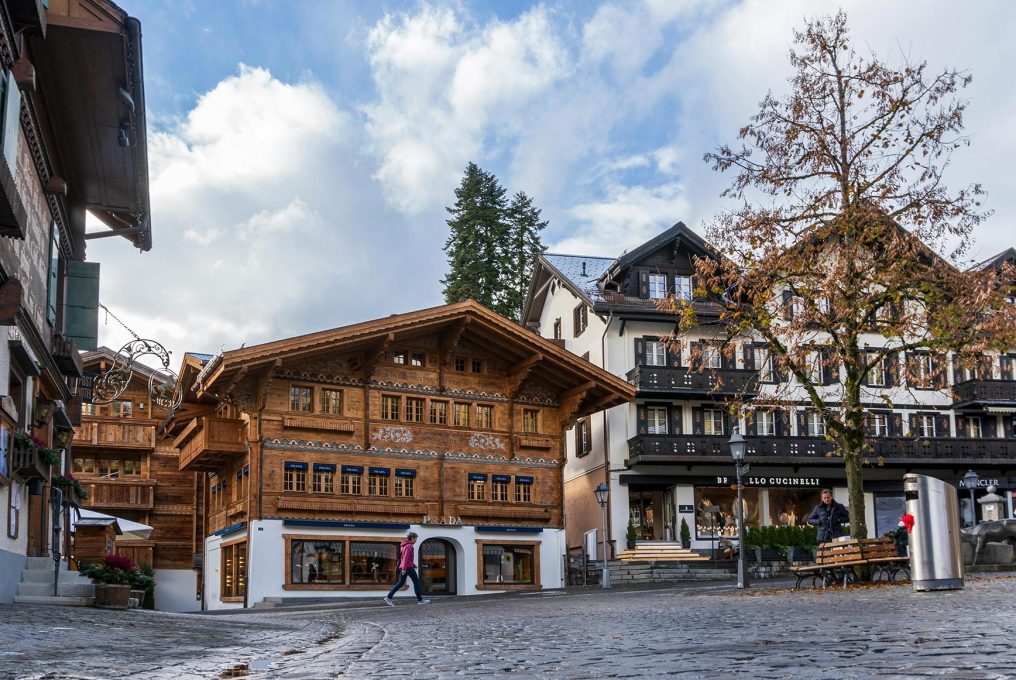
Across the global landscape of prime real estate, a handful of destinations stand apart for their ability to combine lifestyle appeal with long-term investment resilience. London, Monaco and Geneva often dominate discussions of global wealth hubs, but within the world of ultra-prime property, the Swiss Alpine resort of Gstaad occupies a uniquely prestigious position.


Nestled in the Bernese Oberland, Gstaad has evolved from a quiet mountain village into one of the most exclusive residential destinations in Europe. Its discreet culture of luxury, combined with strict development controls and enduring international demand, has created a real estate market defined by rarity and exceptional value.
For sophisticated investors seeking assets that balance lifestyle with capital preservation, Gstaad represents something increasingly rare in the global property market: true scarcity paired with enduring demand.
A Global Luxury Destination with Quiet Prestige
Gstaad’s rise as a luxury destination began in the early 20th century when European aristocracy and cultural elites were drawn to its pristine Alpine setting. Unlike many international resort towns that evolved into high-density tourist centres, Gstaad has retained a distinctive character defined by privacy, understated luxury and architectural harmony.
Today, the village has become synonymous with discretion. Its visitors and property owners include royalty, global entrepreneurs and ultra-high-net-worth families who value privacy as much as prestige.
Despite its small size, Gstaad offers world-class amenities. Michelin-starred restaurants, luxury boutiques and internationally recognised cultural events coexist with expansive ski terrain and year-round outdoor activities. This balance between lifestyle and exclusivity has helped the resort build a reputation often compared to Aspen in the United States or Courchevel in France.
Yet the defining feature of Gstaad’s property market is not lifestyle alone – it is the structural forces that support long-term value.
The Economics of Exclusivity: Why Supply Remains Limited
One of the primary reasons Alpine property markets such as Gstaad have demonstrated remarkable resilience is the limited ability to expand supply.
Swiss legislation plays a significant role in maintaining scarcity. Regulations governing second homes and foreign ownership restrict large-scale development in many Alpine municipalities. These policies limit the number of new properties entering the market, which in turn supports long-term price stability.
At the same time, Switzerland’s political neutrality, economic stability and reputation for security continue to attract international buyers. Wealthy families often view Swiss real estate not only as a lifestyle asset but as a strategic store of wealth in uncertain times.
As a result, the Alpine luxury market has experienced consistent demand even amid global economic volatility.
Understanding Gstaad’s Position in the Global Property Market
To appreciate Gstaad’s role in the international luxury real estate landscape, it is helpful to examine how it compares with other prime destinations.
Urban markets such as London and Geneva are typically driven by global finance, international mobility and strong rental demand. Prime properties in Geneva, for example, can reach approximately CHF 30,000 per square metre in prestigious neighbourhoods.
Gstaad operates within a different investment framework. Rather than serving as a primary residence or financial hub, Alpine properties are often viewed as legacy assets or second homes, purchased for long-term ownership and family use.
This difference in purpose has not prevented the resort from achieving extraordinary property values.
According to UBS luxury property research, ultra-prime homes in Gstaad start at around CHF 39,000 per square metre, placing the resort among the most expensive residential markets in Switzerland.
In exceptional cases, properties can command even higher valuations. Some premium residences across the Swiss Alps have surpassed CHF 50,000 per square metre, with record transactions reaching significantly higher levels.
Comparatively:
| Destination | Ultra-Prime Property Prices |
| St. Moritz | from ~CHF 43,000 per m² |
| Gstaad | from ~CHF 39,000 per m² |
| Verbier | from ~CHF 36,000 per m² |
These figures place Gstaad firmly among the most valuable mountain property markets in the world.
For investors, such pricing reflects not only the desirability of the location but the limited availability of prime properties.
Alpine Property Demand Continues to Rise
The broader Alpine property market has experienced notable growth in recent years, particularly following the global pandemic when buyers began prioritising space, nature and privacy.
According to UBS research, holiday home prices in leading Alpine destinations rose by approximately 2.3% in 2024, demonstrating continued demand despite rising interest rates and economic uncertainty.
Over the longer term, Alpine real estate has significantly outperformed broader property markets. Prices in ski destinations have increased more than 30% since 2020, reflecting strong demand for lifestyle-driven investments.
The trend is further supported by changing buyer preferences. Increasingly, affluent buyers are not simply seeking winter sports properties but year-round wellness destinations.
Luxury chalets now frequently incorporate spa facilities, thermal pools and wellness suites, reflecting a broader shift toward properties that support long-term lifestyle and wellbeing.
Architecture and the Evolution of the Luxury Chalet
One of the defining features of Gstaad’s property market is the unique architectural character of its residences.
Unlike many modern resort developments, Gstaad has carefully preserved its Alpine architectural heritage. Traditional chalets constructed from timber and natural stone remain the dominant design language, although contemporary interpretations increasingly integrate advanced technology and sustainable building methods.
Today’s luxury chalets often include features such as:
- indoor wellness spas and pools
- panoramic terraces with mountain views
- private cinemas and entertainment suites
- state-of-the-art home automation
- geothermal heating and sustainable energy systems.
These homes are designed not merely as seasonal retreats but as multi-generational family residences, combining privacy, comfort and architectural craftsmanship.
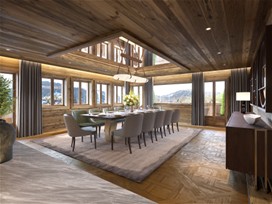
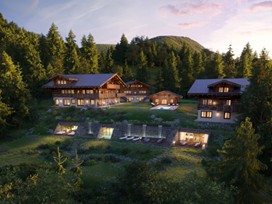
Developments such as Unica’s Chalet Oberbort exemplify this evolution. Located in one of Gstaad’s most prestigious neighbourhoods, the property reflects the integration of traditional Alpine aesthetics with modern luxury amenities.
Such properties illustrate how thoughtful design can elevate real estate from functional space to enduring architectural asset.
Lifestyle as an Investment Driver
While financial fundamentals remain important, lifestyle factors play an equally powerful role in driving demand for Alpine property.
For many buyers, Gstaad offers something increasingly rare: privacy within a globally connected environment.
The region provides access to private airfields, international schools and world-class hospitality while maintaining the atmosphere of a quiet mountain village.
This combination has helped the resort attract buyers from across Europe, North America and the Middle East.
Importantly, Alpine properties are no longer seen purely as winter destinations. Modern infrastructure and changing lifestyles have transformed resorts into year-round communities, offering hiking, wellness tourism and cultural events throughout the year.
This shift has strengthened the investment case for Alpine homes by expanding their usability beyond seasonal visits.
Comparing Alpine Retreats and Urban Prime Markets
From a portfolio perspective, many investors view Alpine properties as complementary assets to urban real estate holdings.
Urban markets such as London or Geneva typically offer stronger liquidity and rental yields due to constant demand from residents and businesses.
In contrast, Alpine homes tend to function as long-term wealth preservation assets, characterised by limited supply and exceptional lifestyle appeal.
This distinction has created a natural balance within many UHNW property portfolios:
| Urban Property | Alpine Property |
| Financial centre location | Lifestyle destination |
| Strong rental demand | Limited supply |
| Higher liquidity | Long-term capital preservation |
Investors increasingly recognise the value of holding both asset types within a diversified property strategy.
Why Global Investors Continue to Choose Gstaad
Several factors explain why Gstaad continues to attract the world’s most sophisticated buyers.
- Structural Scarcity
Development restrictions ensure that supply remains limited, preserving exclusivity. - Political and Economic Stability
Switzerland consistently ranks among the world’s most stable jurisdictions for wealth preservation. - Lifestyle and Wellness
The region offers year-round outdoor activities, clean air and natural beauty. - Architectural Heritage
The preservation of traditional Alpine design contributes to the uniqueness of the market. - Global Prestige
Ownership in Gstaad carries the same symbolic value as properties in Monaco or Mayfair.
A Rare Asset in a Changing World
In an era characterised by rapid economic shifts and technological disruption, physical assets that embody rarity and permanence have become increasingly attractive to investors.
Prime real estate in destinations such as Gstaad offers precisely this combination.
Its limited supply, global reputation and lifestyle appeal create a market that operates largely independent of traditional real estate cycles.
For investors seeking assets capable of delivering both personal enjoyment and long-term stability, Alpine residences represent a compelling opportunity.
Looking Ahead: The Enduring Appeal of Alpine Living
As global wealth continues to expand, demand for exceptional properties is likely to intensify. Alpine destinations that combine architectural heritage, natural beauty and regulatory scarcity will remain particularly well positioned.
Gstaad stands at the forefront of this trend.
Its blend of tradition, privacy and investment resilience has created one of the most distinctive property markets in Europe.
For discerning investors, the resort offers more than simply a home in the mountains – it represents an enduring symbol of timeless luxury and strategic real estate ownership.
A Rare Asset in a Changing World
In an era characterised by rapid economic shifts and technological disruption, physical assets that embody rarity and permanence have become increasingly attractive to investors.
Prime real estate in destinations such as Gstaad offers precisely this combination.
Its limited supply, global reputation and lifestyle appeal create a market that operates largely independent of traditional real estate cycles.
For investors seeking assets capable of delivering both personal enjoyment and long-term stability, Alpine residences represent a compelling opportunity.
Looking Ahead: The Enduring Appeal of Alpine Living
As global wealth continues to expand, demand for exceptional properties is likely to intensify. Alpine destinations that combine architectural heritage, natural beauty and regulatory scarcity will remain particularly well positioned.
Gstaad stands at the forefront of this trend.
Its blend of tradition, privacy and investment resilience has created one of the most distinctive property markets in Europe.
For discerning investors, the resort offers more than simply a home in the mountains – it represents an enduring symbol of timeless luxury and strategic real estate ownership.